


Best Profitable Trade Ups Under $10 in CS2
Discover the most profitable budget trade-ups in CS2. Perfect for beginners with low-risk, high-reward opportunities to grow your inventory.
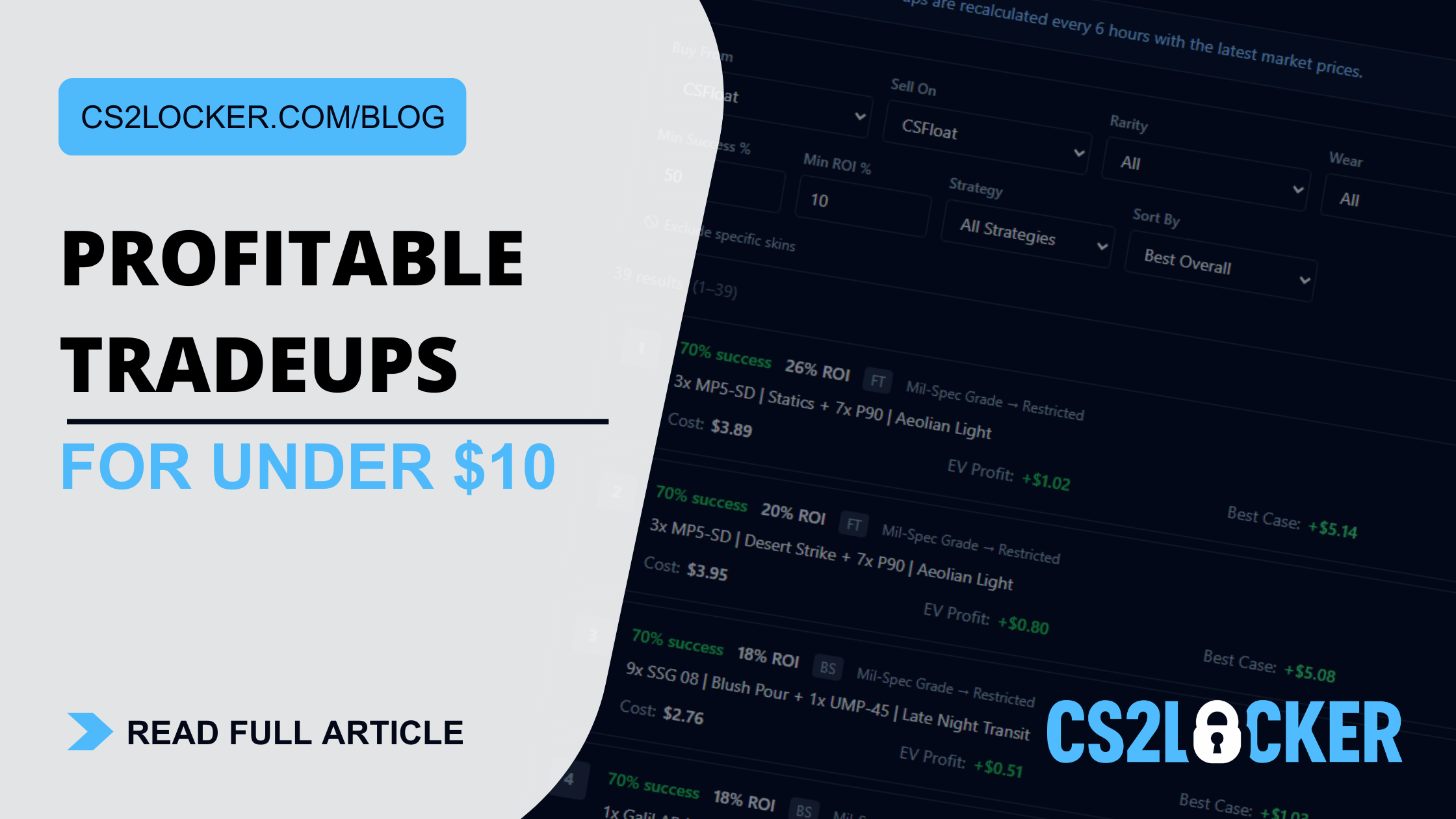
My inventory was worth about $20 when I did my first trade-up. I had no idea what I was doing, just picked 10 skins that shared a rarity and crossed my fingers. What I didn't know at the time is that the budget range - the sub-$10 trade-ups that most people don't bother with - is actually where some of the best opportunities hide. Fewer traders run the math on cheap skins, which means the market inefficiencies stick around longer. These are the strategies that worked for me when I was starting out.
Written by Rick
Founder & developer of CS2Locker - CS2 player and skin collector since 2015.
Why Budget Trade Ups Are Worth Taking Seriously
The obvious appeal of starting cheap is that mistakes cost almost nothing. You can do a trade-up wrong, lose $3, figure out what went wrong, and try again. That kind of low-stakes experimentation is how you actually learn the system - not from reading guides, but from watching what happens when you execute a trade. Beyond the learning curve, volume compounds. Small consistent profits done five to ten times a day add up faster than a single expensive trade-up done once a week. And because cheap skins are heavily traded, you can buy inputs and sell outputs without waiting days for a buyer.
The Three Budget Trade Up Tiers
Tier 1: Mil-Spec to Restricted ($3–8 total input cost)
This is where I'd recommend most beginners start. Inputs typically run $0.30 to $0.80 each, and Restricted outputs can sell anywhere from $2 to $25 depending on the collection. The gap between input cost and a lucky output is large enough to be genuinely exciting, and there's enough market volume that you're never stuck holding something you can't sell. The math also tends to be straightforward at this tier - you're not dealing with complex multi-collection probability splits.
Tier 2: Industrial to Mil-Spec ($0.50–2 total input cost)
Even cheaper. Individual inputs often cost under $0.10, which means your total trade-up commitment is under a dollar. Individual profits are small, but this tier is excellent for learning the float formula and probability system without any financial pressure. There are also some genuinely positive EV opportunities here that go unnoticed because experienced traders don't bother with skins this cheap. That's your edge.
Tier 3: Consumer to Industrial (Under $0.50)
The entry-level floor. Profits are negligible but the education is real. If you've never done a trade-up before, this is where to start - commit a dollar, learn how the system feels, and then move up once you're comfortable with the mechanics.
Collections Worth Knowing About
Dust 2 Collection
One of the most-traded budget collections for a reason. Mil-Spec inputs are cheap and widely available, and some of the Restricted outputs - the M4A4 Evil Daimyo being a standout - sell for amounts that make the trade-up math work out nicely. High market volume means you're never waiting long to buy or sell.
Office Collection
This one gets overlooked, which is precisely why it's interesting. Less trader attention means inputs stay cheaper, and some outputs still carry real value. When everyone's chasing the same popular collections, the forgotten ones tend to have better margins. Don't sleep on this one.
Bank Collection
A small collection with tight economics that occasionally delivers solid budget trade-up opportunities. Worth keeping an eye on when you're browsing for positive EV combinations at the lower price tiers.
How to Run the Strategy
Start by deciding on a total budget - $10 is a reasonable amount for your first few trade-ups. Use the calculator to find positive EV trade-ups within that range. When you're buying inputs, always compare prices across platforms; Buff163 and CSFloat regularly have inputs listed cheaper than Steam Market, sometimes by 20-30%. Execute the trade-up, sell the output, and track what you made or lost. That tracking is important - over time your data will tell you which collections and tiers are working for you and which aren't.
One thing worth internalizing early: resist the urge to force trades when the math isn't there. Waiting for the right opportunity, even if it takes a few days, beats doing a negative EV trade-up just to feel active. Patience is underrated in this game.
What to Expect from Returns
If you stick strictly to positive EV trade-ups, you'll average somewhere around 10–25% return per contract over a large enough sample. Occasionally you'll hit a 200–500% outcome - the randomness works in your favor sometimes. With active trading and quick reinvestment, 50–100% monthly inventory growth is realistic at the budget level. The key word is reinvestment. Profits sitting idle in your inventory aren't compounding.
The Mistakes That Hurt
Chasing losses after a bad trade-up by immediately doing another one is the most common mistake. The EV math doesn't change because you got unlucky once - stick to your criteria and move on. Forgetting about Steam's 15% fee turns apparent profits into losses more often than people realize. And not tracking your results means you're flying blind - you can't improve what you're not measuring. Keep a simple spreadsheet, even just input cost and output value per trade. After 20–30 trade-ups, patterns start emerging.
The CS2Locker trade-up calculator shows you which budget trade-ups have positive EV right now, with the float math already done. Give it a try before your next trade.
Попробуйте наш калькулятор контрактов
Применяйте эти знания с нашим бесплатным калькулятором контрактов
Открыть калькулятор контрактовПохожие статьи
How to Avoid CS2 Scams: Complete Prevention Guide 2026
Protect your CS2 inventory from common scams. Learn about API key scams, phishing, impersonation, and more with our comprehensive safety guide.
guidesBest AK-47 Skins in CS2 Ranked (2026)
The definitive ranking of the best AK-47 skins in CS2. From budget picks under $5 to legendary Covert skins, find your perfect AK with live prices.
guidesBest Budget CS2 Skins in 2026
Build a great-looking CS2 loadout without breaking the bank. The best affordable skins across all weapon categories with live prices.